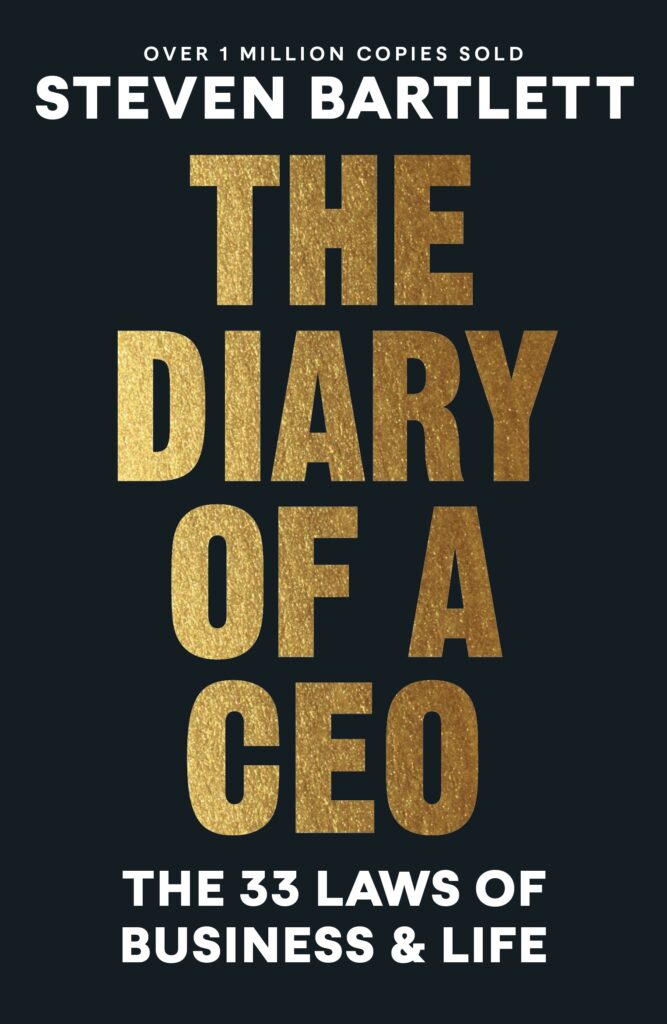
The Diary of a CEO by Steven Bartlett
I've read a lot of business books. Most of them say the same things in slightly different packaging. The Diary of a CEO by Steven Bartlett is different — not because it has all the answers, but because it asks better questions.
If you're in business, building something, or trying to grow in your career, I'd recommend it without hesitation. Here are the three ideas that stuck with me most.
1. Filling the Five Buckets
Bartlett's core framework identifies five areas that every person needs to build:
- Knowledge — What do you understand about the world?
- Skills — What can you actually do?
- Network — Who do you know, and who knows you?
- Resources — What assets (financial, social, reputational) do you have?
- Reputation — What do others say about you when you're not in the room?
The insight is the order. Most people chase resources (money) first. Bartlett argues this is backwards. Build knowledge and skills first — they compound into network, then resources, then reputation. Trying to shortcut to money without the foundation is like trying to build a 10-story building on a 1-story foundation.
"You cannot build a 10-story building on a 1-story foundation."
This reframe hit me hard. As a program manager, I've sometimes felt anxious about career progression — am I moving fast enough, earning enough, getting promoted on the right schedule? The Five Buckets framework shifted my focus from external markers to internal ones. Am I learning? Am I getting better? Am I building relationships that matter?
2. Small Wins and Consistency
Success isn't a dramatic breakthrough. It's the accumulation of small, consistent actions over a long time.
Bartlett quotes the compound growth principle: a 1% daily improvement leads to a 37x improvement in a year. A 1% daily decline leads to near zero. The math is brutal — and the lesson is simple. Your habits are your trajectory.
"Success is not a destination, it's a consequence of your habits."
This resonated with how I think about program management. The best PgMs I've worked with aren't impressive because of any single heroic action — they're impressive because of the small, consistent things they do every day: the brief status update that prevents a week of confusion, the question asked in a meeting that surfaces a hidden risk, the relationship maintained through a difficult conversation.
3. The Quit Framework
This is the one that surprised me most. Bartlett argues that strategic quitting isn't failure — it's wisdom.
Most self-help advice is about persistence. Push through. Never give up. Bartlett adds nuance: sometimes the bravest thing you can do is quit a good thing in pursuit of a great one. The question isn't "should I quit?" but "am I quitting to escape, or to pursue?"
Eliminating good pursuits that don't serve your five buckets is how you create space for the ones that do. Saying no to the decent opportunity is how you stay available for the exceptional one.
Final thoughts
I came away from The Diary of a CEO with a reframe I didn't expect: careers aren't ladders to climb, they're buckets to fill. The ladder metaphor puts you in competition with others. The bucket metaphor puts you in competition with your own potential.
Which of the 33 laws in the book resonated with you most? I'd genuinely love to discuss — reach me on LinkedIn.